
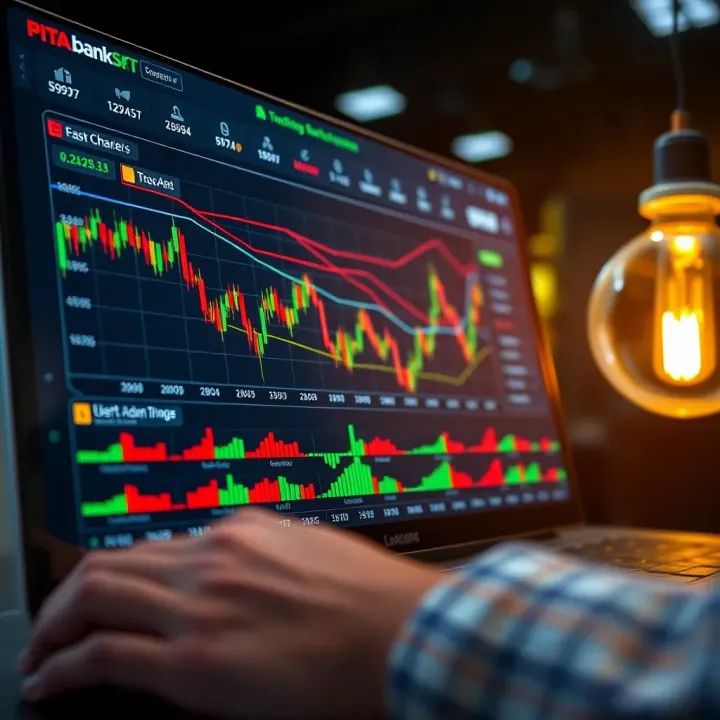
Best Trading Platforms for Beginners in Pakistan
🤔 New to trading? Discover how to pick the best trading platform in Pakistan with tips on fees, security, and easy-to-use features for beginners.
Edited By
Charlotte Greene
Trading has become a popular way for many Pakistanis to grow their savings beyond traditional bank deposits and real estate. Still, learning trading without a clear plan often leads to losses instead of gains. This guide focuses on practical steps beginners can take to understand trading, build skills, and eventually trade confidently in Pakistan’s financial environment.
Trading involves buying and selling financial assets like stocks, commodities, currencies, or cryptocurrencies within short to medium periods. Unlike long-term investing, trading is about spotting opportunities and managing risks daily or weekly. For instance, a person might trade on the Pakistan Stock Exchange (PSX) by buying shares of Engro Corporation and selling them when prices rise within weeks or months.

Before jumping in, grasping the basic types of trading is essential:
Day Trading: Opening and closing positions in the same day, often multiple times. It requires constant attention and quick decision-making.
Swing Trading: Holding assets for days or weeks to catch price swings. This is less intense than day trading but still needs active monitoring.
Position Trading: Keeping trades open for months or longer, relying on broader market trends.
Understanding these types helps you choose a style that fits your schedule and risk appetite.
Pakistan presents unique opportunities and challenges in trading. For example, many traders prefer local platforms like PSX for stocks or international platforms that support PKR deposits and withdrawals through JazzCash or Easypaisa. Also, knowledge of regulatory requirements by the Securities and Exchange Commission of Pakistan (SECP) and tax guidelines from the Federal Board of Revenue (FBR) is vital.
Starting with a demo account or virtual trading platform lets you practise without risking real money, building confidence and strategy awareness.
Set clear learning goals: know what markets you want to trade, the financial limits, and time you can invest. Realistically, trading demands discipline, patience, and continuous learning—much like mastering any skill.
Having the right mindset, combined with local context knowledge, is the foundation of successful trading for beginners in Pakistan. The sections ahead will break down essential tools, strategies, and tips that connect theory with practical action.
Grasping the basics of trading is essential before moving forward, especially for beginners in Pakistan’s market. Trading involves buying and selling financial assets with the goal of making a profit. Without understanding the foundational concepts, it’s easy to make mistakes that cost money or miss valuable opportunities.
Knowing trading basics helps you distinguish between different trading styles, market instruments, and the risks involved. This knowledge allows you to craft an approach suited to your goals and the realities of Pakistani markets, which are influenced by factors like political shifts, economic policies by the State Bank of Pakistan (SBP), and local corporate performance.
Trading is the practice of exchanging assets such as stocks, currencies, or commodities in financial markets. When you trade, you are essentially buying something at a lower price and selling it at a higher price, or vice versa, hoping to make a profit from price changes. For instance, if you buy shares of a company listed on the Pakistan Stock Exchange (PSX) and the price rises, you gain from the difference.
Trading takes place in various markets and can be done by individuals or institutions. It’s not the same as investing alone; trading often involves shorter-term transactions to exploit price movements. This distinction matters because trading demands different strategies and risk tolerance.
Traders generally choose among day trading, swing trading, and long-term trading based on their style and objectives. Day trading means buying and selling in the same day, aiming to profit from small price moves. Swing traders hold positions for days or weeks, focusing on medium-term trends. Long-term traders, often called investors, hold assets for months or years to benefit from fundamental growth.
Each style requires different skills and time commitments. For example, a day trader needs quick decision-making and constantly follows market updates, while a long-term trader studies company fundamentals over time.
The PSX is Pakistan's main stock market where shares of listed companies are bought and sold. Trading stocks on PSX is probably the most common way for Pakistanis to enter the financial markets. Companies from sectors like banking, energy, textiles, and cement are listed here. For example, multinationals like Lucky Cement and Habib Bank Limited (HBL) frequently attract traders due to their liquidity and news flow.
Stock trading on PSX allows you to own a piece of a company and benefit from its profits via dividends and price appreciation. However, prices can fluctuate widely due to economic changes, policy announcements, or global events like oil price shifts.
Forex trading involves exchanging one currency for another, such as the US dollar (USD) against the Pakistani rupee (PKR). Currency pairs show how much one currency is worth in terms of another. Forex markets operate 24/5 globally, offering opportunities for Pakistani traders to speculate on PKR movements or global currency fluctuations.
Forex trading is popular here due to remittance flows and the volatility of PKR against major currencies. Traders use forex to profit from exchange rate changes or hedge against currency risk. That said, forex carries higher risks due to leverage, so a clear understanding and discipline are necessary.
Pakistan's commodity trading includes agricultural products like wheat and sugar, as well as energy resources such as oil and gas. Futures are contracts to buy or sell an asset at a future date for a fixed price. They help traders speculate or hedge prices in volatile markets.
For example, a miller might use wheat futures to lock in prices and avoid unexpected costs caused by supply issues or government policies. Commodity futures trading requires understanding global supply-demand, weather patterns, and local regulations, which makes it a bit more complex but valuable for diversification.
Understanding these basics sets a strong foundation. It guides you on what to trade, how to approach it, and what to expect — all crucial for successful trading in Pakistan's unique market environment.
Starting your trading journey means getting familiar with the tools and platforms that will shape your experience. This step is vital in Pakistan’s context, where access to reliable brokers, compliant platforms, and easy account funding can vary. Choosing the right broker and platform ensures smoother trades, timely execution, and protection of your investment.
What to look for in a broker: When picking a broker, focus on their reputation, fees, and trading instruments offered. A broker with transparent charges and competitive brokerage rates saves you money in the long run. Also, check if they provide access to the relevant markets like the Pakistan Stock Exchange (PSX) or forex trading. For example, brokers like AKD Securities and JS Global offer comprehensive services tailored for Pakistani traders.
Regulatory considerations and SECP guidelines: Confirm that your broker is registered with the Securities and Exchange Commission of Pakistan (SECP). This protects you from fraud and ensures they follow local regulations. SECP oversees brokers’ operations to keep the market fair and transparent. A SECP license means they have to keep client funds separate and report activities regularly, reducing the risk of malpractice.
Features of commonly used platforms: Trading platforms provide the interface for executing trades and analysing markets. Popular platforms in Pakistan include MetaTrader 4 and 5 for forex, and local platforms like PSX’s own online trading system. Key features to look for are real-time quotes, advanced charting tools, and order types. For example, MetaTrader offers automated trading via Expert Advisors, which many beginners find handy for reducing emotional decisions.
Mobile trading apps available locally: Mobile apps make trading accessible anywhere, even during heavy loadshedding hours, provided you have backup power. Apps like PSX’s mobile app, iTrade by MCB, and brokers’ proprietary apps allow convenient order placement and portfolio tracking. The ease of mobile apps means you can react quickly to market moves without being tied to your desk.
Required documents such as CNIC and NTN: To open a trading account in Pakistan, you must provide your Computerised National Identity Card (CNIC) and National Tax Number (NTN). These documents verify your identity and tax compliance. SECP requires brokers to collect these for legal and tax reporting purposes. Without them, account opening can stall.
Options for deposits and withdrawals: Pakistani traders have several options to fund accounts or withdraw profits. Common methods include bank transfers, mobile wallet services like JazzCash and Easypaisa, and direct cash deposits at broker offices. These options cater to diverse users, whether urban or rural, and ensure timely access to funds. Some brokers may also link directly to your bank account for seamless transactions.
Starting right with the proper tools and platforms builds a solid foundation. This helps traders handle Pakistan's unique market challenges confidently and securely.
Mastering trading strategies is a must for any beginner in Pakistan looking to succeed in the markets. These strategies help you make informed decisions based on data and patterns, rather than guesswork. Developing a solid grasp on both fundamental and technical analysis gives you the tools to understand market movements and identify opportunities with more confidence.
Understanding key financial indicators is the backbone of fundamental analysis. These indicators, such as earnings per share (EPS), price-to-earnings (P/E) ratio, and dividend yield, shed light on a company’s health and profitability. For example, when evaluating a PSX-listed company like Habib Bank Limited (HBL), checking its quarterly earnings and growth trends can help you predict its stock potential.
Macroeconomic factors also play a critical role in Pakistan’s markets. Interest rates set by the State Bank of Pakistan (SBP), inflation data, and government policy changes directly influence sectors and stock prices. For instance, a hike in SBP’s policy rate can affect banking stocks negatively due to higher borrowing costs, while infrastructure development through CPEC projects might boost construction and steel companies.
Candlestick charts are a popular way to visualise price movements. Each candle represents the open, close, high, and low prices for a specific time period, revealing buying and selling pressures. Pakistani traders often use candlestick patterns to spot trend reversals or continuation in stock or forex markets.
Indicators like the Relative Strength Index (RSI), Moving Average Convergence Divergence (MACD), and moving averages help you confirm trends and momentum. For example, the RSI signals overbought or oversold conditions, alerting you when a market may reverse. Moving averages smooth out price data to highlight the trend direction—handy during Pakistan’s often volatile trading sessions.
Starting with paper trading or demo accounts lets you practise strategies without risking real money. Local brokerage firms and trading platforms offer these options, allowing you to get familiar with order types, timing, and market behaviour in a risk-free setting. It’s like driving a car in an empty parking lot before hitting busy roads.
Transitioning from demo to live trading requires discipline and realistic expectations. Many beginners jump too soon and face emotional stress over losses. Gradually moving to live accounts with small capital and sticking to risk management rules helps build confidence. You can test your strategies against real market conditions while protecting your funds.
Practising strategies with a mix of fundamental and technical tools, combined with hands-on demo experience, builds a strong foundation for trading success in Pakistan’s unique market environment.
This practical approach is key to avoiding common pitfalls and shaping a profitable trading journey.
Risk management is the backbone of successful trading, especially for beginners in Pakistan's dynamic markets. Without controlling risk, even a few bad trades can wipe out your capital. Protecting your investment means being practical and disciplined about losses while allowing profits to grow. This approach helps traders stay in the game long-term instead of gambling on quick wins.
A stop loss is a fixed point to automatically exit a trade if the price moves against you, limiting your losses. For example, if you buy a stock at Rs 100 and set a stop loss at Rs 95, your loss is capped at Rs 5 per share. Take profit works the opposite way—it locks in gains when the price reaches a target. Suppose you aim to sell at Rs 110; when the price hits that, the system sells automatically. Setting stop losses and take profits removes emotional decisions and protects capital during sudden market swings, which can be frequent in the PSX or currency pairs.
How much you trade on a single position impacts your risk level. Position sizing means calculating how many shares, contracts, or lots to buy based on your total capital and risk tolerance. For instance, risking 2% of your Rs 100,000 trading account on one trade means you shouldn't lose more than Rs 2,000 if the stop loss triggers. Diversification means spreading trades across different sectors or instruments so one loss doesn't devastate your entire portfolio. In Pakistan, this might involve trading both PSX stocks and commodity futures to balance risk.
Emotions like greed and fear can push you to enter trades impulsively or hold losing positions too long. For example, after a series of wins, some traders take larger risks thinking fortune will continue, often leading to heavy losses. Conversely, fear can cause premature exits from profitable trades, cutting gains short. Learning discipline is key: stick to your strategy, follow your stop losses, and don’t let short-term feelings dictate decisions.
Skipping essential risk controls is a common blunder, especially among beginners. Not setting stop losses or overexposing capital on a single trade often leads to heavy losses. Imagine investing Rs 50,000 into one stock without a stop loss during unstable economic times in Pakistan; a price drop can significantly damage your portfolio. Following risk management rules proactively saves your capital and builds confidence to trade consistently.
Protecting your capital is not about avoiding losses entirely but managing them wisely so you can trade another day. Prioritising risk management empowers you to approach trading with a clear mind and steady hand.
Effective risk management lets you focus on opportunities without fearing every dip. Keep practising these strategies as you grow your trading skills in Pakistan’s market environment.
Trading in Pakistan’s markets requires more than just knowledge of charts and numbers; developing the right mindset is equally important. Patience and discipline help you avoid rash decisions, while staying updated keeps you adaptive to market changes. This section digs into these essential habits and points you towards valuable local resources.
Patience is key in trading because not every opportunity will pay off instantly. For example, a trader waiting for PSX stock prices to reach a target shouldn’t sell too early just out of excitement or fear. Discipline means following your trading plan strictly, such as setting stop losses and sticking to position sizes, without letting emotions take over. Traders who rush their decisions often end up with losses due to impulsive buys or sells. Consistent success comes from resisting the urge to overtrade and letting your strategies work over time.
Discipline and patience help you trade like a professional, not like someone just chasing quick wins.
The Pakistan Stock Exchange (PSX) regularly releases market summaries, corporate announcements, and index movements. Keeping an eye on these updates helps you spot trends and understand the market mood. For instance, if a major company listed on PSX reports strong quarterly results, this often reflects in its stock price movement. Timely knowledge of such news can guide your entry or exit strategies.
Forums like PakInvestor or even Facebook groups dedicated to Pakistani traders offer platforms to share insights and ask questions. Engaging with other traders can expose you to diverse perspectives and practical tips. For example, members might discuss specific stocks, brokerage experiences, or strategies that work locally. However, always verify shared information since not all claims are reliable.
The State Bank of Pakistan’s (SBP) decisions on interest rates and monetary policies directly affect market liquidity and investor sentiment. When SBP lowers the policy rate, borrowing costs decrease, often encouraging investment in equities. Conversely, rate hikes can tighten liquidity, causing market dips. Understanding these effects helps traders anticipate market reactions during monetary announcements.
Major regulatory changes, like adjustments in tax rules by the Federal Board of Revenue (FBR) or government stimulus packages, can create short-term trading opportunities. For example, when the government announces infrastructure projects, stocks of related companies may rally. Traders able to interpret these shifts swiftly can capitalise on price movements before they stabilise.
In essence, a successful trader in Pakistan combines steady mindset practices with active learning, using local news and economic cues to inform decisions. Keeping these habits sharp will give you an edge in the dynamic markets here.
🤔 New to trading? Discover how to pick the best trading platform in Pakistan with tips on fees, security, and easy-to-use features for beginners.
📱 Looking for the best trading app for beginners in Pakistan? Discover key features, ease of use, and security tips to start trading with confidence today!

Learn trading basics with free courses tailored for beginners in Pakistan 🇵🇰. Explore stocks, forex, crypto, and tips to start without investment 📈💡.
Explore top trading apps in Pakistan 📱 Compare features, security, and ease of use for stock & crypto trading to pick the best platform for your needs.
Based on 15 reviews